
The Top 5 EV Myths Debunked
Jessica Bird | Saturday 4th October 2025 9:06am
Thinking of buying an electric vehicle but put off by certain “myths” and misconceptions? You wouldn’t be alone. While EVs have soared in popularity in recent years (and over 90% of EV buyers say they wouldn’t go back), plenty of drivers are still sceptical about making the switch.
From questions about range and charging to concerns over cost and environmental impact, a handful of myths often hold motorists back from exploring the real benefits of electric driving.
In this blog, Kwik Fit experts Elliott Smith (Tyre Expert) and Josh Bridges (Technical Training Specialist) will separate fact from fiction by debunking the top five EV myths, to help you understand what owning an EV truly looks like.
1. EVs aren't really 'greener'
Myth:
Some drivers think that electric vehicles are no cleaner than petrol cars. The fact that EV batteries create high levels of upfront emissions when manufacturing is often used as evidence to support the view that EV cars aren’t as green as their petrol counterparts.
Reality
EVs can be green, but the answer, as usual, is “it depends”. Just like we get economical and gas-guzzling normal cars, a small light EV is far better for the environment than a giant SUV, electric or not.
EV battery production
When it comes to production alone, it’s true that, currently, electric vehicles tend to have a larger carbon footprint. This is due to the materials that electric vehicles use in their batteries, and that, typically, more transportation is required in the production process.
- However, the gap is becoming smaller, as larger and more optimised factories in better locations are built, reducing transport emissions.
- What’s more, many EVs are moving to batteries that don’t use Cobalt, and some over the next few years will become available that don’t even use Lithium.
EVs and energy efficiency
Despite having relatively high upfront emissions, electric vehicles recoup this offset over the remainder of the vehicle’s lifespan and are generally more efficient on the road. EV motors are more energy efficient than ICE vehicles, too, since they can convert more energy into the movement of the vehicle.
EV charging dependencies
How sustainable an electric vehicle is also depends on where you are in the country, and where the power comes from that is being used to charge the vehicle. For example, if the power station generating the electricity is using fossil fuels, rather than a more sustainable solution, this essentially increases the overall emissions. On this, it’s worth noting that the UK is a world leader in moving to green energy quickly, especially in the offshore wind sector.
2. EVs don't have enough range
Myth:
Many motorists are hesitant to make the switch to EVs for fear of ‘running out of power’ or getting stranded miles from a charger. These concerns are usually founded on the fact that early EV models had limited mileage.
Reality
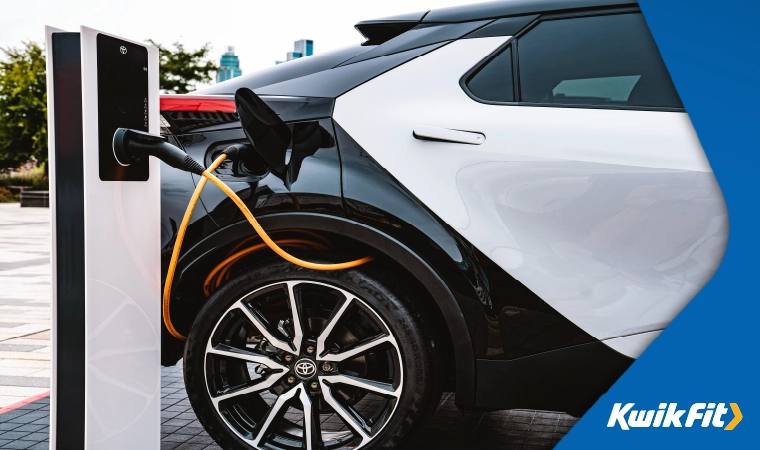
It’s unlikely that you’ll be stranded without power or stuck waiting for your EV to charge for hours on end in 2025. Sure, while earlier models did have slower charging times and less range, technology has moved on and brought with it some pretty impressive advancements in EV capabilities.
Government net-zero targets have driven investment in charging infrastructure and battery technology, which has meant that EVs are now much more powerful and practical. Not only do they charge faster, but there are more places to charge them, with over 80,000 public chargers in the UK.
- The typical range for an average EV model is now between 200 and 300 miles.
- Some of the newest models have a whopping 400 miles of range.
When considering how the average commute is 10 miles, EVs make sense for most drivers, especially since charging points are becoming more common. If you’re still doubtful about stopping to charge your car, ask yourself how long you could feasibly drive for without stopping for a rest break anyway.
If range is something playing on your mind, you may want to read our blog, ‘The EVs With The Longest Range’, to get more familiar with the figures and capabilities of more modern cars.
- If you’re using a 350kW ultra-rapid charger, then it can take as little as 15 minutes to charge your EV.
- And, if you’re on a long drive, most SatNavs and navigation apps like Apple or Google Maps can plan in convenient charging stops on the route to prevent a panicked search.
For the latest facts and figures, read our blog ‘How Long Does It Take To Charge an EV’.
3. EVs cost too much
Myth:
Many drivers are put off by the high upfront costs of EVs, deeming them unaffordable on account of their higher purchase prices in comparison to petrol and diesel vehicles.
Reality
Upfront costs
While early models were quite expensive, you can now purchase an electric car for under £20,000 (like the Nissan Leaf, BYD Dolphin, Citroen e-C3, or Fiat 500E).
There are also a number of government grants that can help you afford the upfront purchase cost of an EV, like the Electric Car Grant, which offers a discount of up to £3,750 on eligible electric vehicle models until 2028/9. £650 million has been set aside to help motorists as part of this scheme.
Running costs
EV running costs are typically cheaper, with fewer service requirements than an ICE vehicle, and charging from home is often cheaper than any petrol or diesel fuel. That said, EV insurance is slightly higher due to the component cost of batteries and motors, and the level of expertise required to repair an EV in the event of an incident.
Battery costs
The most expensive and critical part of an EV is its battery. So, if you’re concerned with retaining the value of your EV, you’ll need to get regular maintenance in the form of EV battery testing.
Second-hand EVs
The second-hand EV market is booming, and is expected to grow exponentially by 2027, led mostly by fleet modernisations and consumer affordability pressures. So, if you’re still reluctant to fork out for a brand-new EV, the second-hand options are improving all the time.
4. EVs are slow or unsafe
Myth:
There’s a common misconception that the quiet operation of EVs makes them more of a hazard to pedestrians. As well as this, their unfamiliar technology creates doubts about their performance.
Reality
Speed
Generally speaking, electric cars aren’t slow; thanks to instant torque from their motors, they deliver quick acceleration right from the start. And, yes, while you might see EVs travelling at slower speeds on the motorway, this is usually because they’re driving at maximum efficiency for the range.
Safety & sound
EVs do feel eerily quiet compared to revving petrol and diesel engines, so much so that it’s led to safety concerns for pedestrians. In response, though, manufacturers have begun pumping artificial noise outside electric vehicles at slow speeds to aid with pedestrian interactions in situations like car parks, to give a little more warning. Sometimes, the same technology is used inside the cabin to aid with a driver’s sense of speed too.
Safety tech
A benefit to EVs being ‘newer’ is that they come with all the latest safety features and technology, making them ultra-compliant with new regulations - take ADAS as a prime example. Considering how much investment comes from OEMs (Original Equipment Manufacturers), EVs are also more likely to adhere to the rigorous manufacturer’s standards for safety too.
5. EV batteries wear out fast and can't be recycled
Myth:
Lots of drivers have concerns around the degradation of EV batteries and waste levels, particularly around safe disposal, landfill issues, and the costliness of battery replacements.
Reality
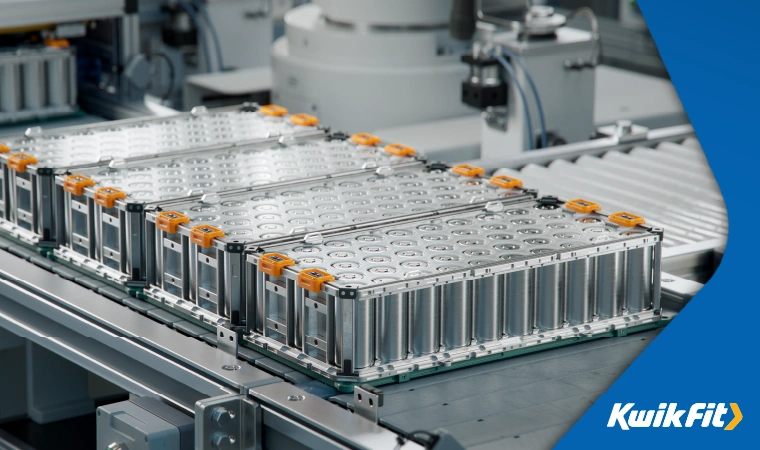
EV batteries can absolutely be recycled and cannot be legally thrown in a landfill. The lithium-ion batteries that come with most electric cars are recyclable, as long as they are handled carefully.
The largest issue currently at the end of an EV’s life is actually that they are lasting too long! To run a viable recycling plant, you need enough material to recycle to make money. There are just not enough EV batteries needing recycling yet to make this worthwhile, so they are being stored.
In the next few years, we may have the volume to be able to justify building these recycling centres for large EV batteries, which will kick in and the recycling “issue” will disappear overnight.
- For added reassurance, the warranties for EVs are often incredibly long (with some as many as 7-8 years or 100,000 miles), showing great manufacturer confidence.
EV servicing, tyres & more at Kwik Fit
If you’ve already made the switch to an electric or hybrid car, keep it in tip-top condition with regular EV servicing and specialist EV tyre services from your local Kwik Fit.
Still need convincing before making the change? Head over to our blog to find out more about charging, owning, and maintaining electric vehicles.
For any other questions, contact our friendly team.


Any facts, figures and prices shown in our blog articles are correct at time of publication.
Featured Articles
Is it Illegal to Drive With One Headlight?
Saturday 19th July 2025
Wondering if it’s illegal to drive with one headlight? Learn about the safety risks and penalties of illegal blown bulbs and why you should fix them promptly.
Air Con in EVs & Hybrids: Experts Answer Your Questions
Monday 30th June 2025
Does air con drain EV batteries? Can you use the air con while charging an electric car? Find out the answers to these questions & more from Kwik Fit’s experts.
Why Is Your Car Making a Noise? Fixes & Tips
Friday 13th June 2025

When your car starts making unexpected noises, it can certainly be quite disconcerting; it may be nothing to worry about, but here’s what you need to know.